
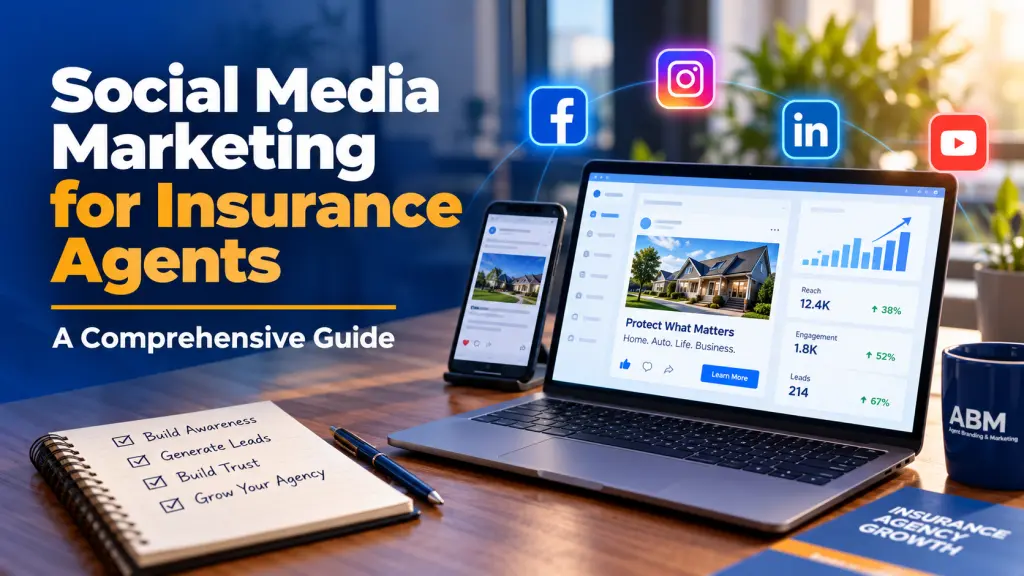
An insurance agent can publish five social media posts a week, collect a respectable number of likes, and still have no reliable way to turn that attention into new business. That does not mean social media is ineffective. It means activity has been mistaken for strategy.
Social media matters because people rarely choose an insurance agent after a single interaction. A homeowner may see a post about storm preparation, look up the agency’s Google reviews, visit its website, and request a quote days later. A young family may watch a short video about life insurance and return when the timing is right. In both situations, the post is part of a larger decision-making process.
That is the distinction agents need to understand. Social media is not a stand-alone marketing solution. It is a trust-building component of a connected growth system—one that combines local visibility, relevant content, paid reach, a credible digital presence, and consistent follow-up.
The real question is not, “Should my agency be on social media?” It is, “How will our social media presence help us become the agency people in our market recognize, trust, and choose?”
Table of Contents
ToggleKey Takeaways
- Start with strategy. Identify the local audience, coverage opportunity, and agency growth goal before choosing a platform or posting schedule.
- Build trust instead of chasing likes. Useful insurance education, local relevance, and authentic engagement give prospects a reason to remember your agency.
- Give each channel a defined role. Use business pages to demonstrate expertise, community groups to earn trust, and paid campaigns to reach a focused audience.
- Connect the full marketing ecosystem. Social media should reinforce your website, Google Business Profile, reviews, content, and follow-up systems—not operate in isolation.
- Measure outcomes that matter. Look beyond views and engagement to qualified conversations, quote requests, policies written, and long-term client relationships.
Build Business Pages That Strengthen Local Authority
Creating a business page on Facebook, Instagram, LinkedIn, or another platform is the starting point, not the strategy. A page only becomes valuable when it gives people a clear reason to pay attention and a straightforward way to engage with your agency.
Start with the fundamentals. Make sure your agency name, service area, contact information, brand presentation, and insurance specialties are clear and consistent with your website and Google Business Profile. Visitors should immediately understand who you serve, what you help them protect, and how to reach you.
Then focus on the content. Most agents do not need more generic graphics announcing that they sell home, auto, or life insurance. Their communities already know insurance exists. What prospects need is evidence that a particular agent understands the questions and risks that matter in their lives.
For example, a homeowner facing storm season may value a short explanation of how to prepare a home inventory or what questions to ask during a coverage review. A first-time buyer may want to understand why a lender’s insurance requirements are not necessarily the same as a household’s broader protection needs. That kind of practical education gives people a reason to remember the agent behind the message.
Consistency is important, but posting frequency alone is not the objective. Use a sustainable schedule that allows you to share accurate, locally relevant information, introduce your team, demonstrate community involvement, and respond when people engage. Where permitted, authentic client reviews and testimonials can reinforce that credibility.
Just as important, connect social content to a useful next step. A helpful post might point to a related article on your website, invite someone to ask a question, or offer a coverage review. Without that connection, attention often ends at the post.
The measure of success is not simply whether the page gains followers. Look for meaningful conversations, relevant website visits, quote requests, and prospects who arrive already familiar with your agency.
Use Social Media Groups to Earn Community Trust
Social media groups offer insurance agents another opportunity, but the approach has to be different. A business page is a space your agency manages. A neighborhood or community group is a space where credibility must be earned.
Too many businesses enter these groups with one goal: promote their services. They post offers, drop links, and leave. That may put their name in front of people, but it rarely builds the kind of trust that produces lasting client relationships.
A smaller group of engaged local homeowners, parents, or business owners may be more valuable than a large group with little connection to your market. Participation should begin with listening. What questions are people asking? What local concerns keep coming up? Where can an experienced insurance professional add clarity without turning every conversation into a sales pitch?
Consider a community discussion following a hailstorm. Instead of posting “Call us for a quote,” an agent could explain the importance of documenting damage, understanding deductibles, and speaking with the appropriate claims representative about the specific policy. The agent contributes useful context without promising an outcome or giving blanket coverage assurances.
Agents who manage their own groups can take the same approach by sharing community updates, educational resources, relevant events, and helpful discussions. The purpose is to build an active community—not just a bigger mailing list.
Over time, group participants may become prospects or refer someone who needs help. That relationship is built through relevance, responsiveness, and visible commitment to the community. Respect group rules, avoid discussing private policy details publicly, and move sensitive conversations into an appropriate secure channel.
Use Paid Social Advertising to Accelerate the Right Strategy
Organic content and community participation create familiarity, but they take time. Paid social advertising gives an agency the ability to place a relevant message in front of a larger audience more quickly. That is valuable—but only when the campaign supports a clear business objective.
Here is where agents can waste money. They pay for visibility before deciding whom they want to reach, what they want that person to do, or how the agency will respond when interest turns into an inquiry. An ad can generate traffic, but traffic by itself does not grow a book of business.
Begin with a specific audience and a specific opportunity. An independent P&C agency might promote a homeowners coverage review in the communities it serves. An agent focused on life insurance might offer an educational resource for growing families. The message, creative, and call to action should all speak to the needs of that audience while respecting platform targeting restrictions and applicable insurance marketing rules.
Then connect the campaign to the rest of the system. The ad should lead to a relevant page or clear contact option. The next step should be simple. Inquiries should enter a dependable follow-up process so the agency can respond promptly, answer questions, and track the progress from inquiry to quote to policy.
Paid campaigns are flexible; budgets, creative, audiences, and timing can be adjusted as results become clearer. But flexibility is not the same as guaranteed efficiency. Depending on the platform and campaign setup, advertisers may pay for impressions, clicks, or other billable actions—not necessarily for a qualified lead or a policy sold.
That makes measurement essential. Cost per click and cost per lead can help diagnose a campaign, but the more important questions are whether the leads are qualified, whether they become productive conversations, and whether the cost of acquiring those clients makes sense for the agency.
AI can help analyze patterns and test variations in messaging and creative more efficiently. It cannot replace sound judgment, accurate coverage explanations, or a sales process that follows through. Paid social performs best when the advertising and the agency’s operations are working toward the same outcome.
Frequently Asked Questions
Which social media platforms should insurance agents prioritize?
Prioritize the platforms your ideal local clients use and your team can manage consistently. Choose channels based on your target audience, insurance lines, and growth objectives—not platform popularity.
How often should an insurance agency post on social media?
Choose a sustainable schedule instead of chasing a daily quota. Share accurate, locally useful content and respond when people engage. Qualified conversations matter more than sheer posting volume.
What should insurance agents post on social media?
Answer common coverage questions, share local preparedness tips, introduce your team, and highlight community involvement. Use authentic testimonials when permitted, and avoid blanket guarantees about coverage or claims.
Should insurance agents invest in paid social media advertising?
Paid ads can be worthwhile when you have a defined audience, a relevant message, a clear next step, and prompt follow-up. Measure qualified inquiries, quote opportunities, and acquisition cost—not clicks alone.
How does social media connect with an agency’s website and local SEO?
Social content builds familiarity. Your website converts interest; Google Business Profile and local SEO support discovery; reviews reinforce trust; and CRM workflows help ensure follow-up. Keep messaging consistent across those touchpoints.
How can AI improve social media marketing for insurance agents?
AI can organize client questions, repurpose approved content, test creative, and analyze results. Use human review to protect insurance accuracy, agency voice, privacy, and carrier or regulatory compliance.
How should an insurance agency measure social media ROI?
Track inquiries, qualified conversations, quotes, and policies written alongside campaign spending. Connect those records in your CRM where possible, and consider social media’s contribution to trust and retention across the ecosystem.
At Agent Branding & Marketing, we approach social media as one connected part of an AI-centric, insurance-specific growth ecosystem—not an isolated service. We work alongside agents to align strategy, local visibility, advertising, content, and conversion systems around long-term agency growth.
Contact us today for a free strategy consultation. We will look at how your current social media efforts fit into the larger picture and identify practical opportunities to strengthen your local position, attract better-qualified prospects, and turn more of that attention into lasting client relationships.
Schedule a Strategy Session





Choose a Social Media Strategy That Supports Agency Growth
The right strategy will usually include both organic and paid activity, but not every agency needs to be everywhere. The first decision is to identify the customers, coverage needs, and local markets that represent the strongest growth opportunity.
A captive agency trying to deepen relationships with existing households may need a different content mix than an independent P&C agency expanding into neighboring communities. A Medicare-focused agent may have different audience questions and compliance obligations than an agency focused on commercial coverage. The strategy should reflect those realities—not the latest social media trend.
Select the platforms where your ideal clients actually spend time and where your agency can show up consistently. Use business pages to demonstrate expertise, groups to participate in community conversations, and paid campaigns to extend the reach of focused messages. Each channel should have a defined role.
The larger opportunity comes from connecting those efforts. Your website should give people a clear path to contact you. Local SEO and your Google Business Profile should help prospects discover and validate the agency. Educational content, videos, and reviews should reinforce its credibility. CRM workflows and appropriate automation should make sure interested prospects receive timely attention. Social media contributes to this ecosystem; it should never be expected to carry the entire growth strategy on its own.
AI belongs at the center of that operating model as a multiplier. It can help organize recurring client questions, turn an approved educational article into a series of social posts and short video scripts, evaluate which messages are attracting relevant inquiries, and identify gaps in the agency’s content. But insurance-specific accuracy, brand judgment, privacy, and carrier or regulatory compliance still require human oversight.
As you evaluate performance, move beyond surface-level engagement. Track the inquiries social media helps create, the quality of those conversations, quote opportunities, new policies, and—where your data supports it—retention or cross-sell opportunities. If a campaign produces attention but no meaningful business activity, examine the message, audience, destination, and follow-up process before simply posting more often.
This is why a sustainable social media program requires more than someone to publish content. It requires strategic direction, coordinated execution, ongoing measurement, and accountability for outcomes. For insurance agents who want to lead their local markets, the objective is not to become popular on a platform. It is to build a recognizable, trusted agency that continues to earn business across the entire customer journey.